
Everybody has an opinion on this. Half the internet tells you ceramic is the future. The other half says stainless steel is the only real option. The actual answer sits somewhere in between and it depends heavily on how you cook, not on what is trending. Let’s go through this properly.
The “Ceramic” Label Is Not What You Think
This is the part most articles skip over. When you buy a ceramic pan today, you are almost certainly not buying something made of clay. What you are buying is a metal pan (usually aluminum) with a silicone-based coating sprayed onto it. The American Ceramic Society actually calls these “quasi-ceramic” because they go through a curing process at only 400 to 800 degrees Fahrenheit. Real ceramic fired from clay gets processed above 2000 degrees. That is a massive difference.
The coating is made through what manufacturers call sol-gel technology. Silicon dioxide (basically sand) is mixed with binders and metal oxides, sprayed onto the pan and baked. The result is that slippery surface people love. It is not toxic in the traditional sense but because the formula is proprietary, you never fully know what is in it.
A 2020 investigation by the consumer safety site Lead Safe Mama found titanium dioxide nanoparticles in several popular brands including GreenPan and Caraway. Nanoparticles in their bulk form are considered safe but the nano form is still being studied. That is not a reason to panic but it is worth knowing before you spend money on any brand.
Stainless steel has none of this complexity. It is a metal alloy of iron and chromium, sometimes with a bit of nickel. No coatings, no binders, no sol-gel process. What you see is what you get.
The Heat Problem Nobody Warns You About Clearly Enough
A 2024 scientific study tested ceramic-coated pans at multiple temperatures and found severe coating wear beyond 250 degrees Celsius (around 480 degrees Fahrenheit). That is not an unusually high temperature in a kitchen. A pan preheated on medium-high can reach that range in under three minutes.
Most ceramic brands tell you to cook on low to medium heat. That advice exists for a real scientific reason, not just to make the pan last longer. The coating genuinely degrades faster once you push past that threshold. When it degrades, the surface becomes rough and loses its non-stick ability and potentially releases whatever is in the coating into your food or the air.
Stainless steel has no such ceiling. You can blast it on high heat, put it in a very hot oven, take it straight from stovetop to oven and back. It does not degrade under cooking temperatures. Professional kitchens use stainless because nothing about the pan changes with heat.
Durability: The Gap Is Bigger Than You Expect
Ceramic coatings wear out. That is not a flaw in one brand. It is the nature of the material.
Older coating tests from Whitford, a major non-stick coating supplier, found that even the best ceramic coatings lasted only about one-sixth as long as PTFE coatings. Ceramic brands have improved since then, but the gap has not fully closed. A quality ceramic pan with good care gets you roughly one to three years of real non-stick performance. After that, the surface changes and cooking becomes more frustrating than it needs to be.
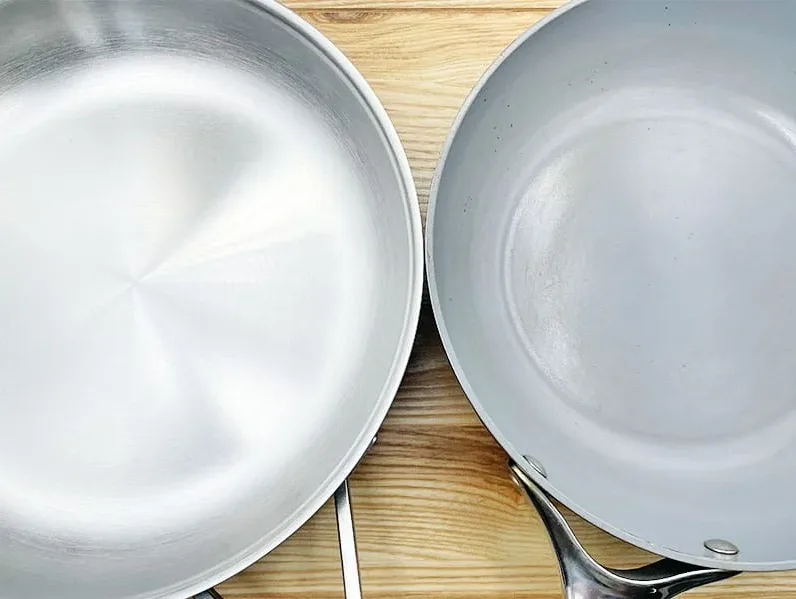
Stainless steel does not have a timeline like that. A good stainless steel pan from a reputable brand can genuinely last your whole life. People cook with the same stainless pots for thirty years without any change in performance. That is just what metal without a coating does. It ages without degrading.
Non-Stick: Ceramic Wins Early, Stainless Wins Long Term
Fresh out of the box, a ceramic pan is genuinely easier to cook with. Eggs slide out, fish does not tear, and sauces do not grab the bottom. You barely need oil. That ease is real.
Stainless steel requires a specific technique. Heat the pan first until a water droplet skips across the surface rather than evaporating. Then add oil and let it shimmer. Then add food. When you do this correctly, stainless becomes nearly non-stick. Skip any step and you will be scrubbing the bottom afterward.
The catch with ceramic is that the non-stick surface fades with use. A pan that was effortless on day one gets stickier month by month. Stainless does not change that way. Its behavior stays the same year after year. So in year one, ceramic wins. By year three, stainless is often the only one still working properly.
Safety: Both Are Fine With One Caveat Each
Both are considered PFAS-free options and that genuinely matters. Traditional Teflon-style coatings used PFOA in manufacturing, a chemical the International Agency for Research on Cancer classifies as carcinogenic to humans. Modern ceramic coatings and stainless steel avoid that entirely.
For ceramic the caveat is temperature discipline and coating integrity. Keep the heat moderate and the pan undamaged and it is a safe choice. Let it scratch up and cook on it at high heat regularly and you are cooking on a degraded surface with unknown byproducts.
For stainless the caveat is metal leaching. Lower-quality stainless can leach trace amounts of nickel and chromium over time, particularly when cooking acidic foods like tomato sauce for long periods. Research has documented this. Buying quality stainless and not cooking highly acidic dishes in scratched or damaged pans keeps the risk minimal.
Neither is dangerous when used properly and bought from a trustworthy brand. The risk in both cases comes from misuse or cheap construction.
Cleaning, Price and the Practical Reality
Ceramic is easier to clean. Food barely sticks so a soft cloth and soapy water usually handles it. The rule is hand-wash only because dishwashers degrade the coating fast. So every use means hand-washing, which is fine until you are short on time.
Stainless is more forgiving. Dishwasher safe. If something bakes on hard you can scrub it with Bar Keepers Friend and it comes right back. The pan does not care how aggressively you clean it.
On price the math is more interesting than it looks. A quality ceramic set costs between 150 and 400 dollars and gets replaced in a couple of years. A quality stainless set might cost more upfront but it is typically a one-time purchase. Brands like Masterclass Cookware sit in the perfect mid-range space where both ceramic and stainless options are available, which makes us a reasonable starting point when you are figuring out which type actually suits your kitchen before committing to a bigger investment. Over ten years, stainless steel often works out cheaper.
What Actually Makes Sense for Most Kitchens
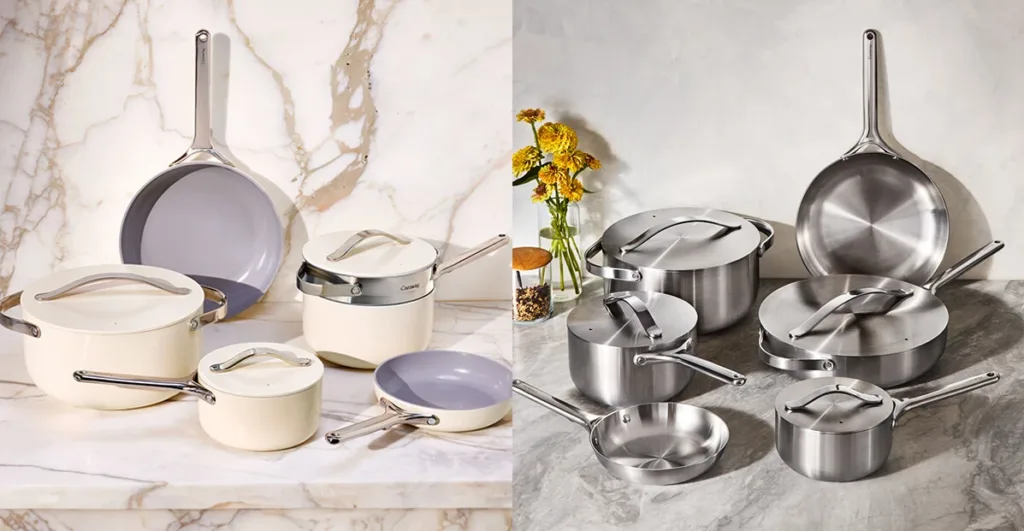
If you mostly cook eggs, fish, pancakes and lighter meals on medium heat then ceramic is a genuinely good fit. The ease of cooking and cleanup makes daily life more pleasant. Just accept that you will replace it eventually.
If you cook a wide variety of things including anything that needs high heat, searing or going from stove to oven then stainless is more practical. The preheating technique takes a short time to learn and once you have it the pan handles nearly everything.
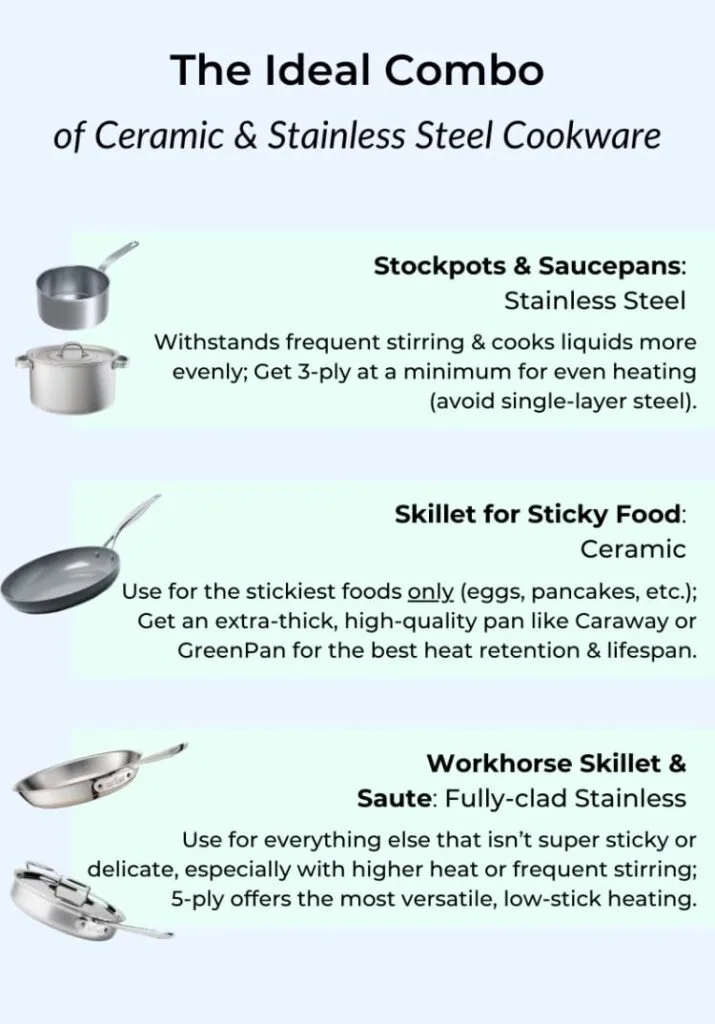
A lot of experienced home cooks end up with one ceramic frying pan for eggs and delicate foods alongside stainless pots and pans for everything else. That combination covers nearly every cooking situation without compromise.
FAQs
Can you use a ceramic pan on high heat?
Technically yes, but the 2024 wear study found significant coating degradation starts around 250 degrees Celsius. Regular high heat cooking shortens the life of the coating fast and may degrade it in ways you cannot see or smell.
Does stainless steel make food taste metallic?
Not with good quality stainless used properly. Problems appear with scratched lower-grade pans cooking acidic foods for long periods. Good brands and proper use prevent this.
Is ceramic cookware really non-toxic?
Reputable brands certified against PFAS, lead and cadmium are considered safe. The honest nuance is that the sol-gel formula is often proprietary so the full ingredient list is not always disclosed. Third-party certifications like NSF compliance are worth looking for.
Why does my ceramic pan stick now when it did not before?
The coating has worn down. This happens to every ceramic pan with use. Once the non-stick surface degrades it does not recover. That is the point when replacing it makes more sense than fighting with it.
Can stainless steel go in the dishwasher?
Yes. Most quality stainless pans are dishwasher safe. Hand washing is better for long-term appearance but the dishwasher does not damage performance.
Which is better for someone new to cooking?
Ceramic is more forgiving early on because it does not need precise preheating technique. Eggs and simple meals are easier to manage. Stainless is worth learning over time because of how versatile it becomes.
Do I need to season a ceramic pan like cast iron?
No. Ceramic pans do not need seasoning. Some people wipe a small amount of oil on a new pan before first use but it is not required. The non-stick surface comes from the coating itself, not from built-up seasoning.
The Bottom Line
Cookware decisions get overcomplicated by marketing on both sides. Ceramic is a real convenience, especially in the beginning. Stainless is a real investment, especially over time. Neither is wrong. What matters is matching the tool to how you actually cook, not how you imagine you might cook one day. Buy what fits your habits now, learn what the pan needs from you, and the rest follows naturally.